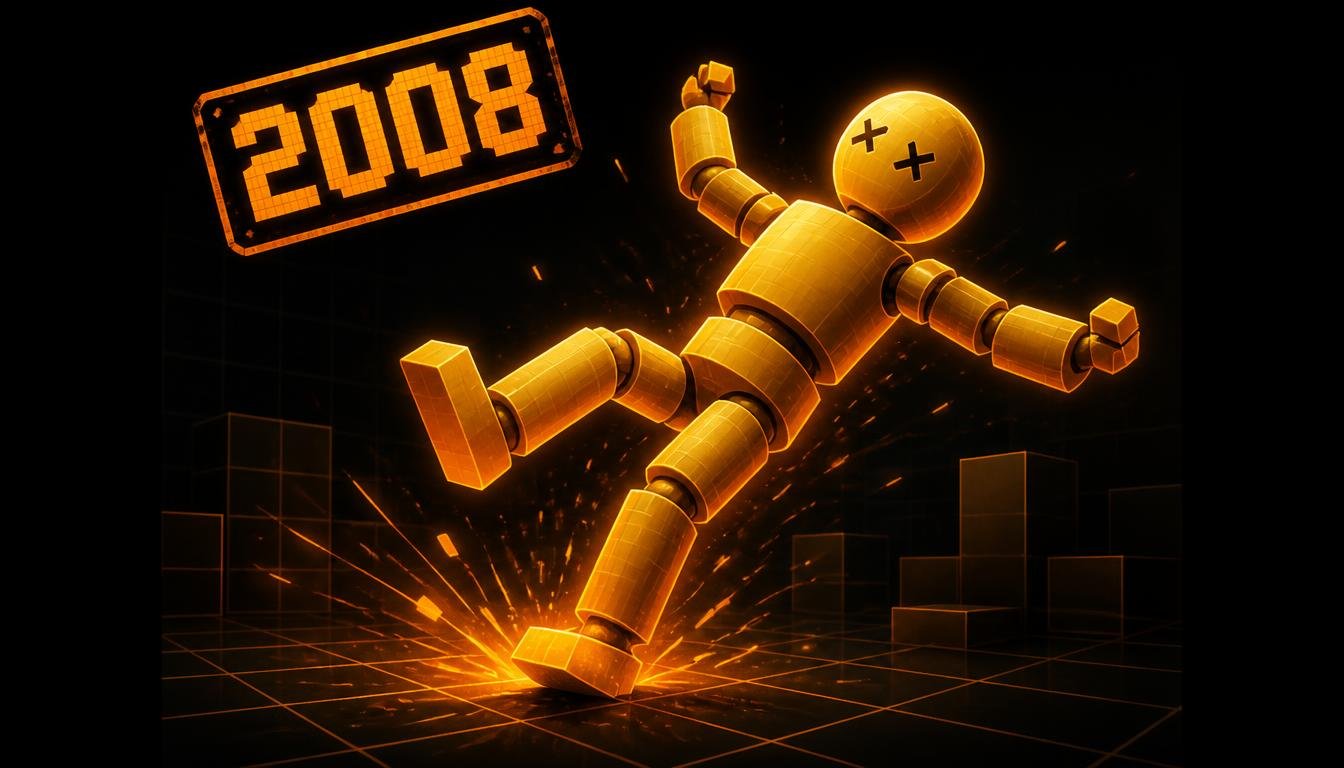
Euphoria Engine GTA 4 2008:
There’s a specific moment in GTA IV’s history that’s easy to overlook: when Rockstar founder Sam Houser first proposed using a new physics-based animation technology in the game, his own team initially told him it would be impossible to use beyond cutscenes. They were wrong, and the result changed how the entire industry thought about character animation.
What Euphoria Actually Is
Euphoria is animation middleware created by NaturalMotion, built on technology the company called Dynamic Motion Synthesis. Rather than using pre-recorded, looped animations, Euphoria simulates a character’s body, muscles, and motor nervous system in real time — meaning every fall, recovery, or physical reaction is calculated dynamically rather than played back from a fixed file. Even replaying the exact same in-game scenario produces slightly different physical results each time.
Why GTA IV Was a Genuine Gamble
When Houser first expressed interest in using Euphoria, engineers reportedly told him it would be limited to cutscene use at best — full integration into live, interactive gameplay was considered too technically ambitious. NaturalMotion engineers worked on-site at Rockstar North for extended periods to make full gameplay integration actually work, a genuine technical risk for a studio about to ship one of its biggest releases.
What Euphoria Changed About GTA IV
The payoff was immediately noticeable. NPCs reacted to being shot, shoved, or threatened with believable, non-scripted physical responses — raising their hands, stumbling, or scrambling for cover based on the specific physical forces involved rather than a single canned animation. A 2017 retrospective piece from gaming outlet PC Gamer specifically singled out GTA IV’s Euphoria-driven physics as a feature that, even years later, few other games had matched.
The Technical Cost
This ambition came with real performance costs. GTA IV’s PC version in particular suffered from notable optimization problems at launch, with frame rate issues and instability that took multiple patches to address. Euphoria’s real-time physics simulation is computationally expensive, and seventh-generation hardware (PS3, Xbox 360) was pushed close to its limits trying to run it at scale.
How Euphoria Spread Beyond GTA
Following its debut in GTA IV, Euphoria became a recurring part of Rockstar’s technology stack, used in Red Dead Redemption (2010) and Max Payne 3 (2012), before receiving its most significant overhaul yet for Red Dead Redemption 2 (2018). The technology wasn’t exclusive to Rockstar either — Star Wars: The Force Unleashed and its sequel also used Euphoria for similarly physics-driven character animation, showing the technology’s influence reached well beyond the GTA franchise specifically.
Why This 2008 Decision Still Matters for GTA 6
Every leaked detail about GTA 6’s character physics and combat animation builds directly on the foundation Euphoria established in 2008. The “Physics 2.0”-style improvements fans expect for GTA 6 aren’t a new technology being introduced for the first time — they’re the latest refinement of a system Rockstar has now been developing and improving for nearly two decades, going back to that initial, uncertain bet on Euphoria for GTA IV.
Staying Updated as More Details Emerge
Rockstar Games has historically revealed information gradually in the months leading up to a major release, and euphoria Engine: How Rockstar’s Game-Changing Tech Started in GTA 4 (2008) is likely to see further clarification as the November 19, 2026 launch date approaches. Official trailers, marketing materials, and eventual hands-on previews will all provide additional data points that either confirm or reshape current community understanding.
In the meantime, this remains an active area of discussion across gaming forums and social media, with dedicated fans continuing to compare notes on every new piece of footage or statement Rockstar releases. Checking back for updates as new information becomes available is the best way to stay current on this specific aspect of GTA 6.
Why This Detail Keeps Coming Up
Discussion around euphoria Engine: How Rockstar’s Game-Changing Tech Started in GTA 4 (2008) has remained active across gaming communities precisely because GTA 6 carries such an unusually high level of anticipation. Even relatively minor details tend to generate extended threads of analysis and debate, reflecting just how closely fans are tracking every scrap of available information ahead of the game’s release.
While it can be tempting to treat every rumor with equal weight, drawing a clear line between officially confirmed information and reasonable community speculation remains the most reliable way to stay informed without getting swept up in inaccurate claims.
Frequently Asked Questions
Q: What is the Euphoria engine?
Animation middleware by NaturalMotion that generates character movement and physical reactions in real time using simulated body mechanics, rather than pre-recorded animations.
Q: Which GTA game first used Euphoria?
Grand Theft Auto IV in 2008 was the first Rockstar game to use the technology.
Q: Did Rockstar’s own team initially doubt Euphoria would work?
Yes, reports indicate Sam Houser’s team initially believed full gameplay integration wouldn’t be feasible, limiting it to cutscenes at best.
Q: Did Euphoria cause technical problems for GTA IV?
Yes, particularly on the PC version, which suffered from notable performance issues at launch tied partly to the engine’s computational demands.
Q: Has Euphoria been used outside of Rockstar games?
Yes, including Star Wars: The Force Unleashed and its sequel.