Los Santos vs Leonida: 5 Big Map Differences Compared

Los Santos vs Leonida:
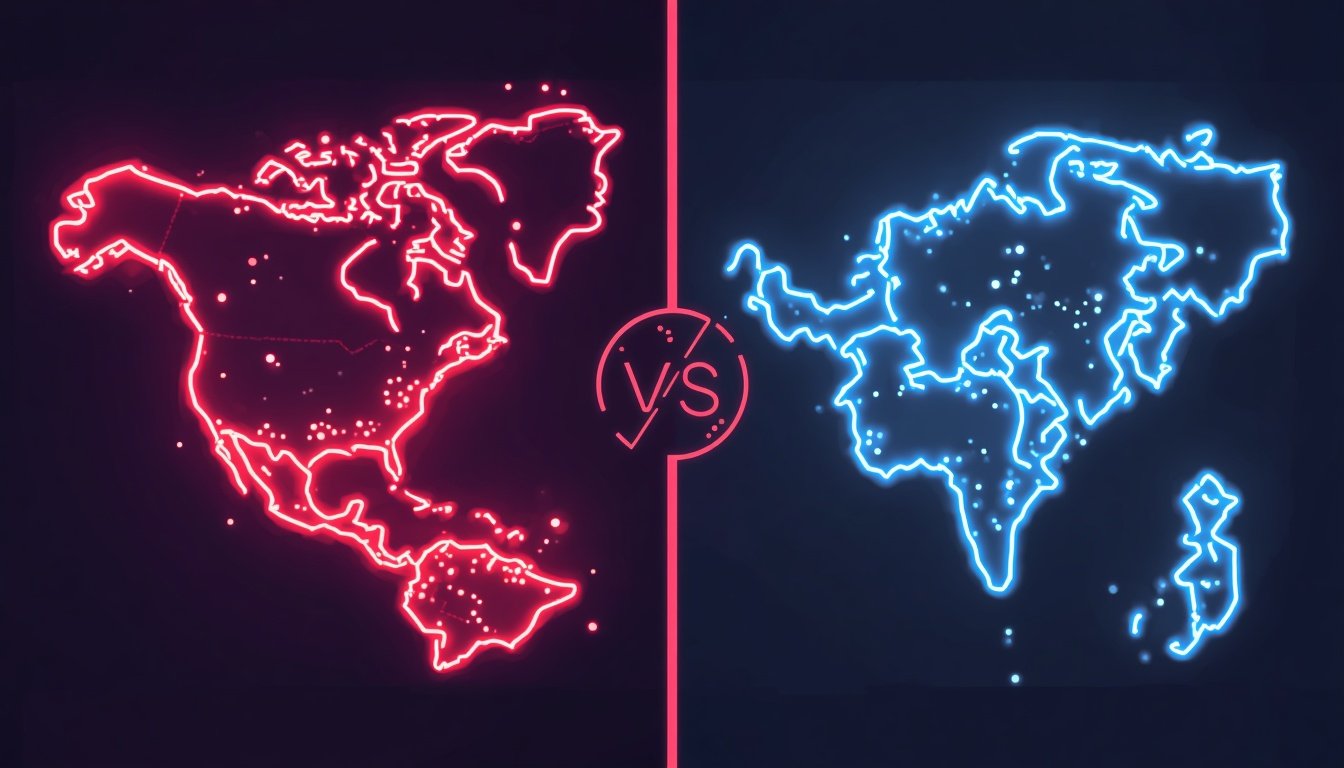
Two states, two very different design philosophies, and over a decade of technological progress separating them. While the previous map-size articles on this site cover the numbers debate in detail, this comparison focuses on how Los Santos and Leonida actually differ in structure, identity, and design intent.
Los Santos: One City, Defined Sharply
GTA 5’s Los Santos was built around a clear, singular identity — a satirical recreation of Los Angeles, surrounded by Blaine County’s desert and mountain terrain. The design prioritized a dense, detailed urban core, with the surrounding rural areas serving mostly as scenic contrast and a backdrop for specific missions rather than a heavily developed secondary hub.
Leonida: A State Built Around Multiple Identities
Leonida, by contrast, appears designed around several distinct regional identities coexisting within one state — Vice City as the dense urban center, Port Gellhorn as a secondary city, the Leonida Keys for island exploration, and Grassrivers for swamp-based content. Rather than one dominant city with a supporting rural buffer, Leonida’s structure spreads meaningful points of interest across multiple, tonally distinct areas.
Real-World Inspiration: California vs Florida
Los Santos drew its satirical identity from Los Angeles and broader Southern California culture — Hollywood excess, gang culture, and sprawling suburban contrast. Leonida draws from Florida specifically, channeling Miami’s nightlife and art deco aesthetic, the Everglades’ swampland, and the Florida Keys’ island geography — a setting that offers a naturally wider range of environmental contrast within a single state’s real-world identity.
Terrain Variety: Desert and Mountains vs Swamp and Coastline
Blaine County’s desert, mountains, and Mount Chiliad gave GTA 5 environmental variety, but within a relatively dry, arid framework. Leonida’s swampland (Grassrivers), extensive coastline, and island chains (the Leonida Keys) introduce water-based and wetland terrain types that GTA 5 simply didn’t feature, requiring different traversal mechanics and environmental design approaches entirely.
City Density: A Likely Upgrade
Community analysis of trailer footage suggests Vice City’s confirmed neighborhoods (Ocean Beach, South Beach, Little Haiti, Little Havana, the Venetian Islands) offer a denser, more granular district structure than Los Santos presented at launch. This isn’t necessarily a knock against Los Santos — it reflects over a decade of additional open-world design experience and current-gen hardware capability that simply wasn’t available in 2013.
Which Map Design Philosophy Is “Better”?
This is ultimately a matter of design priorities rather than an objective ranking. Los Santos’s tighter focus gave GTA 5 one of the most detailed single cities in open-world gaming history at the time of release. Leonida’s broader, multi-region approach trades some of that singular focus for variety and scale — a trade-off that fits GTA 6’s overall ambition to build a more varied, densely populated state rather than one hyper-detailed city surrounded by comparatively sparse countryside.
What This Means for GTA 6 Fans
As with most details surrounding los Santos vs Leonida: 5 Big Map Differences Compared, the full picture will likely only become completely clear once Rockstar shares more official information or players get hands-on time after the November 19, 2026 launch. Until then, the community’s ongoing analysis of trailer footage, official statements, and past Rockstar design patterns remains the best available source for understanding how this specific piece of GTA 6 fits into the bigger picture.
For now, fans following this topic closely are encouraged to treat unofficial claims with appropriate caution while still enjoying the process of speculation and discussion that has become such a large part of the pre-launch GTA 6 community experience. Whatever the final details turn out to be, this remains one of the more actively discussed aspects of the game heading into its release window.
Why This Detail Keeps Coming Up
Discussion around los Santos vs Leonida: 5 Big Map Differences Compared has remained active across gaming communities precisely because GTA 6 carries such an unusually high level of anticipation. Even relatively minor details tend to generate extended threads of analysis and debate, reflecting just how closely fans are tracking every scrap of available information ahead of the game’s release.
While it can be tempting to treat every rumor with equal weight, drawing a clear line between officially confirmed information and reasonable community speculation remains the most reliable way to stay informed without getting swept up in inaccurate claims.
Frequently Asked Questions
Q: Is Leonida bigger than Los Santos and Blaine County?
Community estimates suggest yes, though no official size figure has been confirmed by Rockstar.
Q: What real places inspired each map?
Los Santos drew from Los Angeles and Southern California; Leonida draws from Florida, particularly Miami, the Everglades, and the Florida Keys.
Q: Does Leonida have more than one city like Los Santos did?
Yes — Vice City serves as the main hub, with Port Gellhorn appearing to function as a secondary city, unlike GTA 5’s single-city structure.
Q: Does Leonida have water-based terrain GTA 5 didn’t have?
Yes, including swampland and an island chain, compared to Blaine County’s primarily desert and mountain terrain.
Q: Is Los Santos’s design considered worse than Leonida’s?
Not necessarily — they reflect different design priorities and different eras of open-world game development.
SEC-04 // NEARBY